Hysteroscopy Treatment in Kanpur

Hysteroscopy is a minimally invasive procedure used to diagnose and treat uterine conditions. Dr. Sandhya Gupta, one of the Best gynaecologists in Kanpur, offers personalized Hysteroscopy Treatment to help women manage uterine concerns and support reproductive health.

Hysteroscopy Treatment in Kanpur | Dr. Sandhya Gupta

Hysteroscopy is a minimally invasive procedure used to examine the inside of the uterus and diagnose conditions such as uterine polyps, fibroids, abnormal bleeding, adhesions, or other concerns that may affect reproductive health. Dr. Sandhya Gupta, Obstetrician-gynecologist, provides personalised Hysteroscopy Treatment with careful evaluation and treatment planning based on each patient’s symptoms and medical needs. As an experienced women gynaecologist in Kanpur and trusted Hysteroscopy doctor in Kanpur, she focuses on comfortable, supportive care while helping women understand their condition and available treatment options.

What Is Hysteroscopy Treatment?

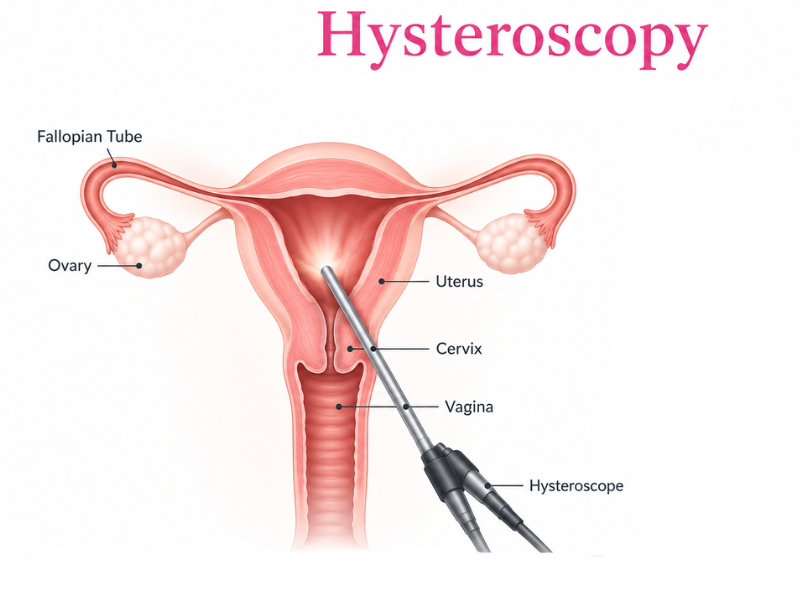
Hysteroscopy Treatment is a minimally invasive procedure used to examine the inside of the uterus and diagnose or treat various uterine conditions. During the procedure, a thin, lighted instrument called a hysteroscope is gently passed through the vagina and cervix into the uterus, allowing the doctor to clearly view the uterine lining.

It can help identify problems such as uterine polyps, fibroids, abnormal bleeding, adhesions, or other abnormalities. In some cases, treatment can also be performed during the same procedure. The procedure is recommended based on the patient’s symptoms, medical history, and diagnostic reports.

Hysteroscopy procedure showing a hysteroscope inside the uterus

When Is Hysteroscopy Recommended?

Hysteroscopy may be recommended when a doctor needs to examine the inside of the uterus to identify the cause of certain symptoms or reproductive health concerns. It can be considered in cases such as:

  • Heavy or irregular menstrual bleeding
  • Unexplained bleeding between periods
  • Suspected uterine polyps or fibroids
  • Repeated miscarriages
  • Difficulty in conceiving
  • Abnormal findings on an ultrasound
  • Suspected scar tissue or adhesions inside the uterus
  • Problems affecting the uterine lining

The need for hysteroscopy depends on the patient’s symptoms, medical history, and examination results.

Benefits of Hysteroscopy

  • Clear uterine examination: Helps the doctor directly examine the inside of the uterus and identify abnormalities.
  • Helps find the cause of abnormal bleeding: Useful for evaluating heavy, prolonged, or irregular menstrual bleeding.
  • Detection of uterine conditions: Can help identify polyps, fibroids, adhesions, and other abnormalities inside the uterus.
  • Treatment during the procedure: Certain polyps, adhesions, and suitable fibroids may be treated or removed during hysteroscopy.
  • Useful in fertility evaluation: Helps identify some uterine problems that may affect conception or pregnancy.
  • Minimally invasive approach: The hysteroscope is passed through the vagina and cervix, generally without abdominal incisions.
  • Personalised treatment planning: The findings help the doctor decide the most appropriate treatment based on the patient’s condition.

Types of Hysteroscopy

1. Diagnostic Hysteroscopy

Diagnostic hysteroscopy is performed to examine the uterine cavity and identify abnormalities such as polyps, fibroids, adhesions, or changes in the uterine lining. It may be recommended when a patient has abnormal uterine bleeding, infertility concerns, or other symptoms requiring further evaluation.

2. Operative Hysteroscopy

Operative hysteroscopy is used to treat certain abnormalities identified within the uterus. Depending on the condition, the doctor may remove polyps, adhesions, or selected fibroids during the procedure. This approach allows treatment to be performed through the hysteroscope without the need for traditional abdominal surgery.

3. Hysteroscopy for Uterine Polyp Removal

Hysteroscopy can be used to remove uterine polyps located inside the uterine cavity. The procedure allows the doctor to directly visualise the polyp and remove it using specialised instruments. It may be considered when polyps are associated with abnormal bleeding, fertility concerns, or other uterine symptoms.

Looking for the Best Gynaecologist in Kanpur for Hysteroscopy Treatment?

Get personalised Hysteroscopy Treatment in Kanpur from Dr. Sandhya Gupta, an experienced Obstetrician-gynecologist and Hysteroscopy doctor in Kanpur, for uterine and reproductive health concerns.

Why Choose Dr. Sandhya Gupta for Hysteroscopy Treatment in Kanpur?

Experienced Obstetrician-Gynecologist

Dr. Sandhya Gupta provides personalised hysteroscopy care with a focus on accurate diagnosis, appropriate treatment, and patient comfort.

Comprehensive Uterine Evaluation

A detailed evaluation helps identify conditions such as uterine polyps, fibroids, adhesions, or other abnormalities that may affect menstrual or reproductive health.

Personalised Treatment Approach

Every patient has different symptoms and medical needs. Dr. Sandhya Gupta develops a treatment plan based on the individual’s condition, medical history, and diagnostic findings.

Minimally Invasive Care

Hysteroscopy allows the uterine cavity to be examined through a thin hysteroscope inserted through the natural vaginal passage. When appropriate, certain conditions can also be treated during the same procedure.

Patient-Centred Women’s Healthcare

Dr. Sandhya Gupta focuses on clear communication, compassionate care, and helping patients understand their diagnosis, procedure, recovery, and available treatment options.

Frequently Asked Questions

Hysteroscopy may be used to diagnose and treat conditions such as uterine polyps, selected fibroids, adhesions, and certain causes of abnormal uterine bleeding.

Hysteroscopy is generally considered a minimally invasive procedure because the hysteroscope is introduced through the vagina and cervix without a traditional abdominal incision.

Recovery depends on the type of hysteroscopy and whether any treatment was performed. Many patients can gradually return to their normal activities as advised by their doctor.

Hysteroscopy can help identify certain abnormalities inside the uterus that may contribute to difficulties with conception or recurrent pregnancy loss. Treatment may be possible during the same procedure in suitable cases.

Yes. Repeated or prolonged menstrual blood loss can reduce iron levels and may lead to iron deficiency or anemia.Hysteroscopy is a minimally invasive procedure used to examine the inside of the uterus with a thin, lighted instrument called a hysteroscope. It can be used for both diagnosis and treatment of certain uterine conditions.

Recovery varies depending on whether the procedure is diagnostic or operative and whether any treatment was performed. Your doctor will provide specific post-procedure instructions and advise when you can return to your usual activities.

Dr. Sandhya Gupta, an experienced Obstetrician-gynecologist, provides personalised hysteroscopy care based on each patient’s symptoms, medical history, and treatment needs.

Dr. Sandhya Gupta, MBBS, MS (Safdarjung Hospital, Delhi), Fellowship in Minimal Invasive Surgery (FMIS), Laparoscopic Surgeon & Laser Cosmetic Gynaecologist. She is the best Gynaecologist & Obstetrician in Kanpur and Consultant Gynaecologist at Surman Hospital, Kanpur. Renowned for her expertise in high-risk pregnancies and infertility, she offers an array of services including: Normal/Cesarean deliveries,  Laparoscopic hysterectomy, Myomectomy, Ovarian cyst removal, Family planning.  Committed to women’s health, she provides solutions for: Ovarian cyst, fibroid, adenomyosis, endometriosis, Urine infection problems, PCOS, Menstrual irregularities, menopause problems, Breast lump, pain, or fibroadenoma etc.

Get In Touch

Copyright © 2025 www.drsandhyagupta.in | Designed by Acecliq digital – All Rights Reserved.

Connect With Dr. Sandhya